Canadian mining company Northern Graphite is set to restart production at the mothballed Okanjande mine in Namibia by the end of next year, the company announced on Wednesday.
Namibia is one of several African countries known to contain commercially viable deposits of graphite, which is in high demand due to its use in batteries that power electric vehicles and energy storage systems.
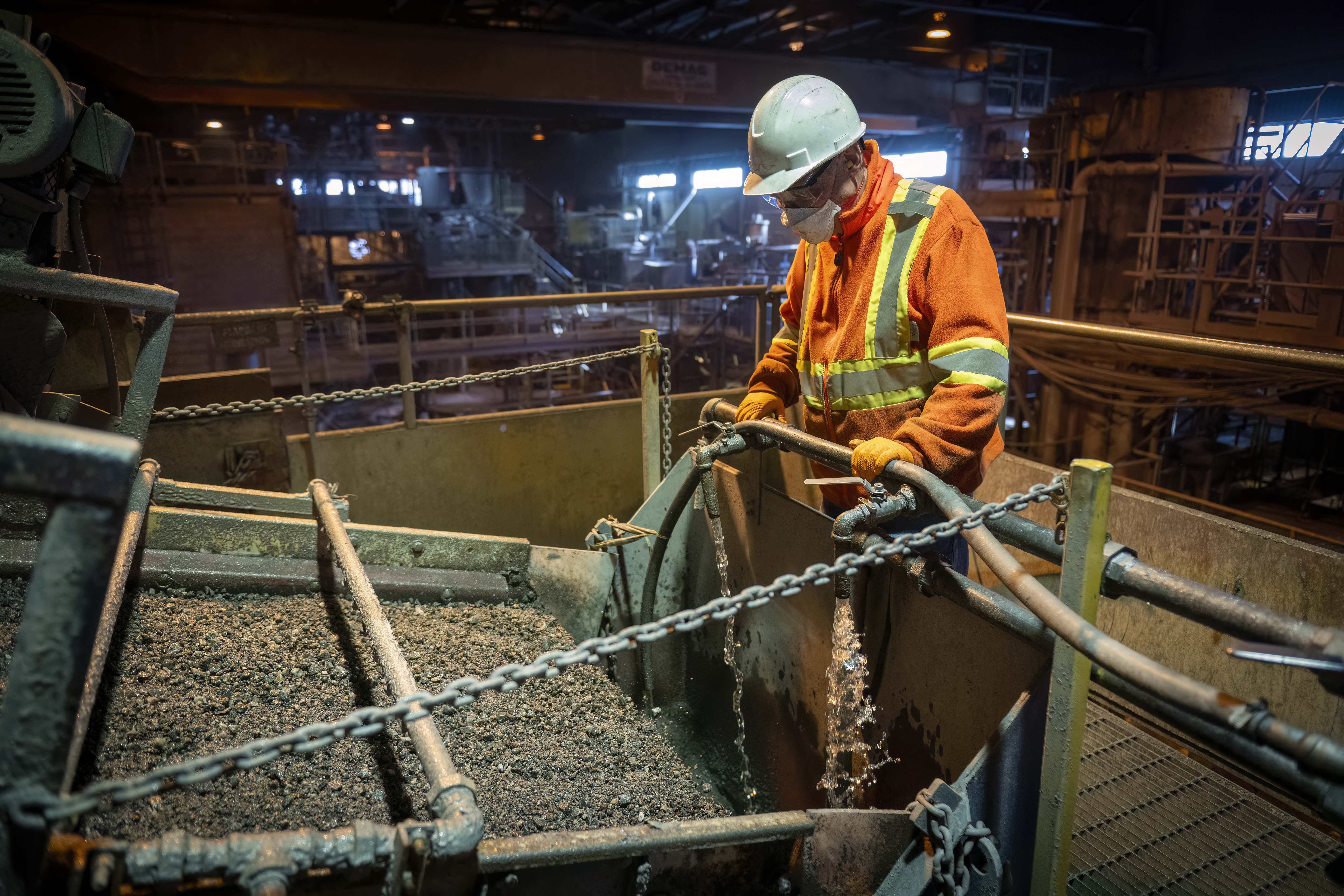
Okanjande was, however, put under care and maintenance in 2018, less than two years after it began production. Northern Graphite acquired the asset from French company Imerys in 2022 and has since been working to restart operations. (Northern Graphite’s facility in Lac-des-Îles, Quebec, is pictured above.)
This has now been made possible by Northern Graphite’s deal with Saudi Arabia’s Al Obeikan Group to build a $200m battery anode material (BAM) plant in the Middle Eastern country. Okanjande will supply the new facility with 50,000 tons per year of graphite concentrate, which will then be refined into material used in batteries.
In an interview with African Business, the Canadian company’s CEO Hugues Jacquemin described Okanjande’s resumption as “very significant” for Namibia.
“We’re now moving full speed ahead to restart the facility.”
Northern Graphite will invest $35m into restarting operations at Okanjande, which requires a new tailings dam, a solar farm to provide power, and upgraded water connections. The company estimates that between 200 and 300 jobs will be created locally.
Infrastructure challenges
While the project is set to deliver an economic uplift for Namibia, some might question why Northern Graphite is not building the BAM plant in the Southern African country.
The company did in fact consider this option, Jacquemin tells African Business, but the idea did not prove commercially feasible.
“The infrastructure in Namibia, in terms of power, water – it’s just not there.”
Northern Graphite will not simply export unprocessed ore from Namibia. The first step of processing will take place locally, where the ore – which contains 5-6% graphite content – will be concentrated into a product that is 96-97% graphite. But completing the process of producing a highly purified material require infrastructure beyond what is readily available in Namibia.
Jacquemin notes the BAM plant will need 68 MW, or around ten times as much as power the mine site. Similarly, the BAM plant will demand large volumes of water, which is also in short supply in Namibia. Another key input, hydrofluoric acid, would also be difficult to source in Namibia.
The reality is that Saudi Arabia is a more “cost-effective” location for a BAM plant, Jacquemin argues. The proposed site in Yanbu Industrial City on the Red Sea coast “is amazing in terms of the infrastructure that it has, in terms of power, water, nitrogen, and so on and so on. So, for us, this became a very logical step moving forward.”
The relationship with Al Obeikan Group will also help the joint venture to secure financing, the bulk of which will come from Saudi sources.