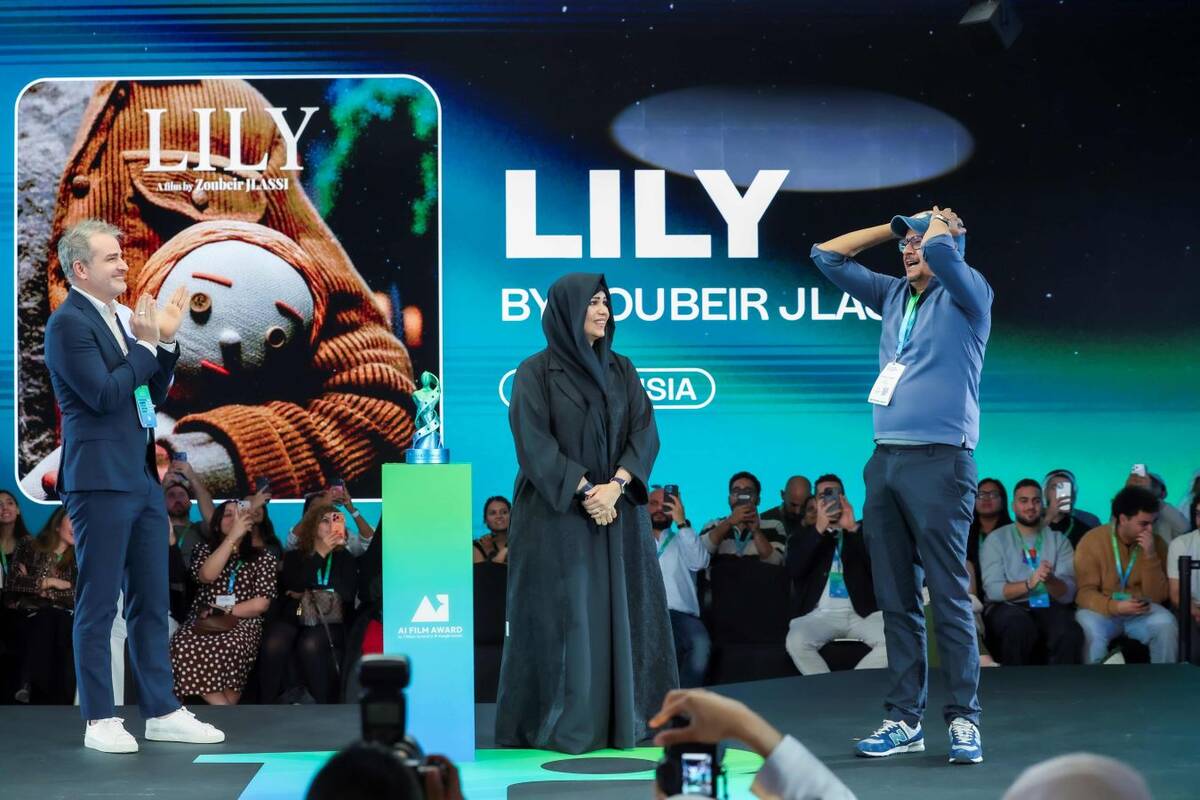
At the 1 Billion Followers Summit, a historic moment for artificial intelligence and global cinema unfolded when Lily, a short film by Tunisian filmmaker Zoubeir Jlassi, won the inaugural Google AI Film Award, carrying a prize of $1m. It was a landmark moment not only for the emerging field of AI-driven filmmaking, but also for Africa’s growing presence in advanced creative technologies.
The award signals a decisive shift in how cinema is made and understood. Artificial intelligence, long viewed as a background tool for editing or effects, has now stepped fully into the creative spotlight as a genuine collaborator in storytelling. Lily demonstrates that AI can be used to produce work of emotional depth and artistic sophistication, capable of standing alongside traditional film at the highest level.
A global stage for the creator economy
The 1 Billion Followers Summit is one of the world’s largest gatherings focused on the creator economy, digital storytelling and emerging technologies. It brings together content creators, filmmakers, technology innovators, AI researchers, global brands and cultural leaders who are shaping how influence and creativity evolve in the digital age. Positioned at the intersection of technology, culture and commerce, the summit provided a fitting platform for the unveiling of a world-first AI film award of this scale.
By awarding a seven-figure prize to an AI-assisted short film, Google and the summit organisers sent a clear message. AI filmmaking is no longer experimental or peripheral. It is becoming a serious artistic and commercial force.
An emerging voice in next-generation cinema
Zoubeir Jlassi has emerged as a distinctive new voice in contemporary cinema by treating artificial intelligence not as a novelty, but as a creative partner. His work focuses on narrative depth, visual poetry and the ethical and emotional questions raised by intelligent machines. Rather than allowing technology to dominate the process, Jlassi uses it to amplify human intent and feeling.
This approach is central to the success of Lily, which avoids the cold, hyper-polished aesthetic often associated with AI-generated imagery. Instead, it offers a warm, intimate visual language that prioritises mood, memory and emotional resonance.
A Tunisian and African milestone
Beyond its artistic achievement, Lily carries significance that extends far beyond cinema. Jlassi’s victory represents a powerful moment for Tunisia and for Africa more broadly in the global AI and creative technology landscape.
At a time when innovation in artificial intelligence is frequently framed as the preserve of Silicon Valley, Europe or East Asia, Lily offers a compelling counter-narrative. Africa is not absent from the future of advanced technology. It is actively shaping it. Jlassi’s success underlines the fact that talent, vision and technical mastery are not limited by geography. With access to the right tools and platforms, African creators are fully capable of competing at the highest global level.
Inside the world of Lily
Lily is a visually intimate and emotionally charged short film that explores innocence, memory, human connection and the quiet loneliness of existence. At its heart lies a meditation on the increasingly blurred line between the artificial and the human.
The film’s handcrafted, almost storybook-like aesthetic stands in deliberate contrast to the sophisticated technology used to create it. This tension reinforces one of the film’s central ideas: that artificial intelligence can enhance human sensitivity rather than replace it. The result is a work that feels tactile and deeply personal, despite being shaped by algorithms and machine learning.
Technology guided by human intent
The film was created using a range of cutting-edge generative AI tools, including AI-driven image generation for characters and environments, AI-assisted animation and motion synthesis, machine-learning-based visual storytelling systems and AI-enhanced post-production workflows.
Crucially, these tools allowed a small, independent creator to achieve cinematic quality without the backing of a large studio. This highlights one of AI’s most transformative potentials: the democratisation of filmmaking. Throughout the process, technology remained firmly guided by human creative intent, ensuring that pacing, emotion and narrative coherence stayed at the centre of the work.
Why the award matters
The $1m Google AI Film Award is more than a prize. It is a statement about the future of cinema. It confirms AI as a legitimate artistic medium, demonstrates that independent creators can compete at the highest level and reinforces the enduring primacy of storytelling, regardless of the tools used to tell it.
Perhaps most importantly, it reframes the relationship between humans and machines. The future of cinema is not a contest between human creativity and artificial intelligence, but a collaboration between the two.
A signal to Africa’s next generation
For young filmmakers, artists and technologists across the continent, Lily is proof of possibility. Jlassi’s journey sends a clear message: innovation does not require abandoning identity, nor does meaningful storytelling depend on access to vast studios or traditional gatekeepers. Participation in AI and future technologies does not require permission.
By approaching AI as a creative tool rather than an obstacle, young Africans can tell their own stories, in their own voices, to a global audience. In this sense, Lily helps to reposition artificial intelligence from a distant or intimidating concept into an accessible medium for imagination, expression and cultural presence.
AI and Africa’s creative future
The success of Lily reinforces a critical idea for Africa’s economic and cultural development. Artificial intelligence has a legitimate and promising place on the continent. It can lower barriers to entry for filmmakers and artists, open new economic and cultural opportunities, and enable African narratives to travel globally without distortion.
Rather than consuming technological futures designed elsewhere, Africa can be a producer of meaning, aesthetics and innovation. Creators like Zoubeir Jlassi demonstrate what becomes possible when access, talent and vision align.
In winning this historic award, Jlassi represents more than himself. He represents Tunisia on a global creative stage, Africa within advanced AI discourse, and a generation of creators determined not to be excluded from the future. Lily will be remembered not only as the first AI film to win a million-dollar award, but as a symbol of inclusion and a signal that the future of AI-powered creativity is truly global.
Watch the film here: